Idle games can fail in two opposite ways. Some demand so much checking that “idle” becomes another chore. Others automate every meaningful decision, leaving little reason to return. The Last Echo is designed around a middle path: routine combat continues without constant input, while equipment, ability, and upgrade choices remain deliberate.
What “offline progress” means
When you leave the game, your party’s routine fighting continues conceptually in the background. When you return, the game calculates the rewards earned during the eligible offline period and presents them as a summary. The goal is to preserve momentum without requiring the app to stay open or asking you to schedule your day around timers.
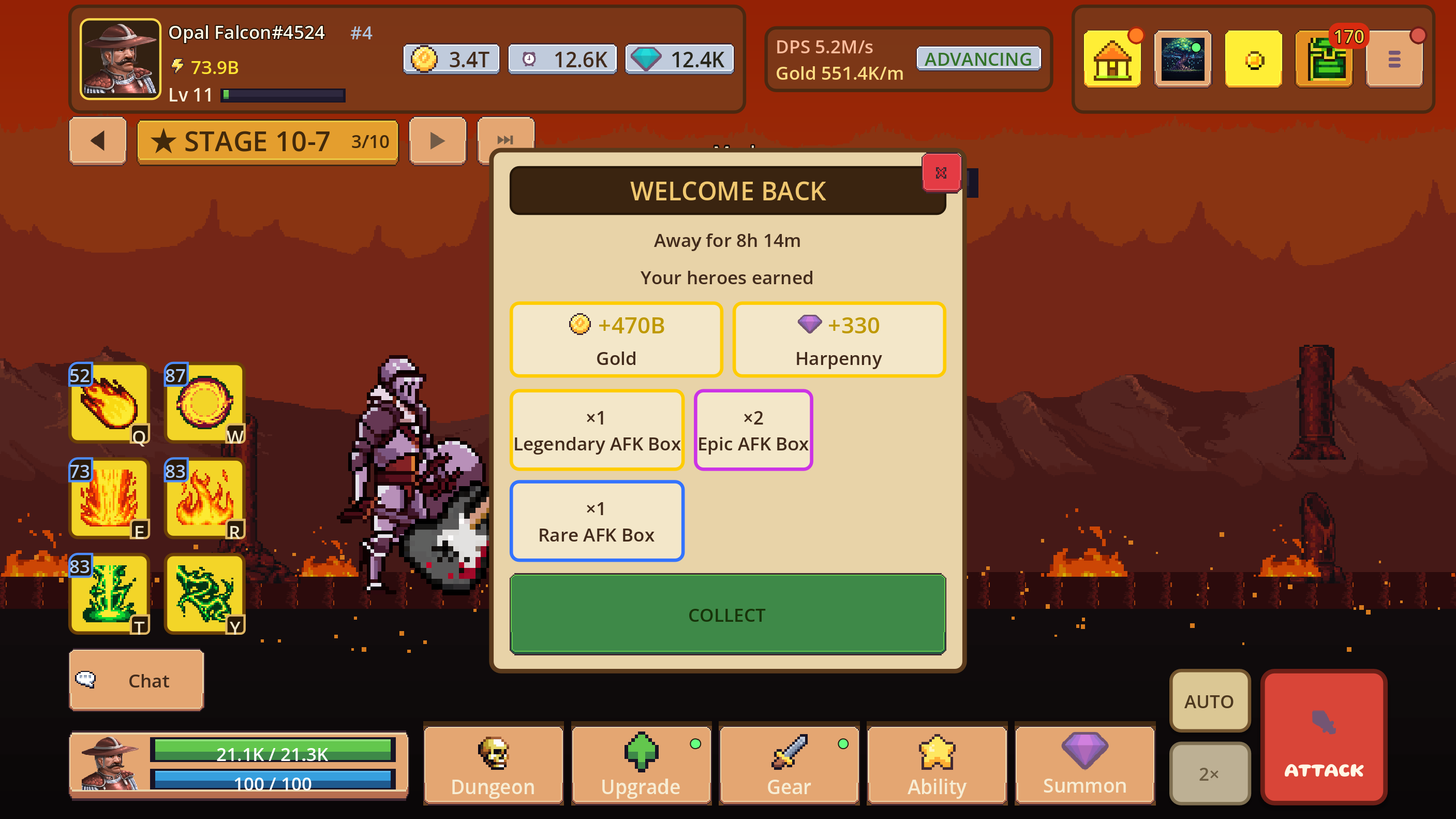
Offline rewards are based on the progression state you had when you left. Improving a character after returning does not retroactively increase the rewards already calculated. That boundary keeps the system understandable: prepare the party, leave, then receive results from that prepared state.
What still benefits from active play
Offline progress handles repetition, not strategy. Active sessions are where you inspect new gear, compare statistics, choose ability investments, attempt new encounters, and decide which long-term upgrades deserve limited resources. These choices change the party state that future routine combat uses.
World bosses and other milestone encounters are useful checks on a build. If progress slows, the answer should not always be “wait longer.” Reviewing equipment slots, ability synergy, and the balance between immediate power and permanent upgrades can reveal a more effective path.
A sensible return-session loop
- Collect and read the summary. Treat it as information, not just a button to dismiss. It tells you what the previous setup produced.
- Inspect new equipment. A higher headline number is useful, but slot coverage and the needs of the current encounter matter too.
- Spend with a purpose. Choose the next obstacle, then invest in the upgrade most likely to address it.
- Test the change. Run an active encounter so you can see whether the decision improved survival, damage, or consistency.
- Leave the party prepared. Your final equipped state becomes the foundation for the next period away.
Why the game does not automate every upgrade
An “upgrade everything” button is convenient, but it can erase tradeoffs. The Last Echo automates repeated fighting because repeating a solved encounter adds little strategic value. It does not make every progression decision automatically because deciding where to commit scarce resources is part of the RPG.
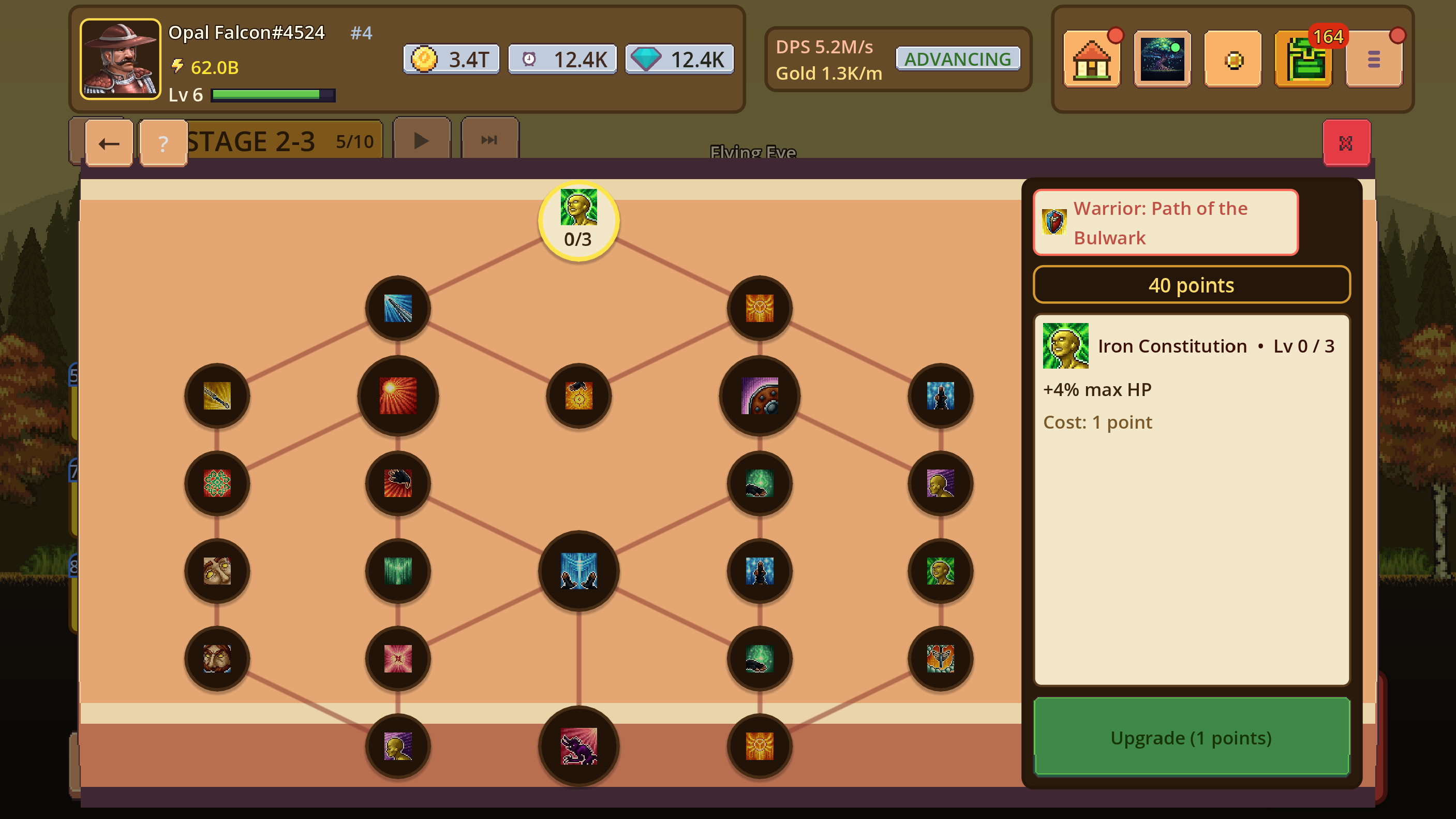
We still aim to remove avoidable friction. Comparisons should be readable, odds should be visible, and the interface should explain the consequence of an action before resources are spent. Convenience and agency are not opposites: the routine parts can be fast while the important parts stay yours.
How to evaluate a stalled build
When a party stalls, change one variable at a time. First check whether every equipment slot is filled with the best relevant item. Next look for an ability investment that directly addresses the failure: survivability if the party is defeated early, damage if it survives but cannot finish, or consistency if outcomes swing heavily between attempts. Test after each change. This produces better information than spending every resource at once.
The game is being balanced throughout testing. Exact numbers can move, but this division of responsibility is intended to remain stable: the game performs routine battles; you shape the build.
Related: first game-session guide · fair-gacha rules · systems reference